Centre des monuments nationaux

Main menu

Monuments placed under the responsibility of the Centre des Monuments Nationaux for opening to the public

  • A
  • B
  • C
  • D
  • E
  • F
  • G
  • H
  • I
  • J
  • K
  • L
  • M
  • N
  • O
  • P
  • Q
  • R
  • S
  • T
  • U
  • V
  • W
  • X
  • Y
  • Z
 
accessi_vous_etes_ici Home  >  Monuments  >  Château de Coucy
Château de CoucyChâteau de Coucy

print_this_page

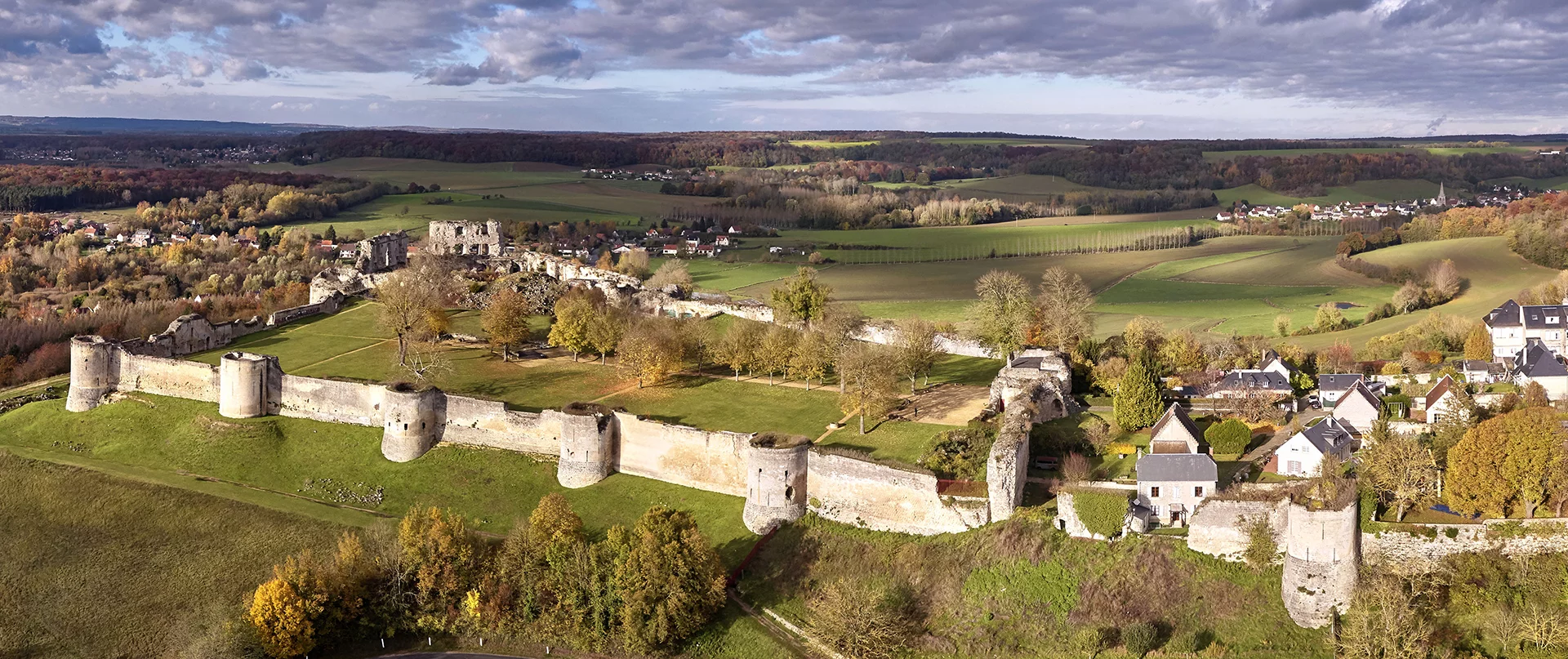
Come and discover the impressive ruins of Coucy castle, one of the most remarkable strongholds in the Western world during the Middle Ages, together with the town enclosure built in the early 13th century on a rocky spur to the north of Soissons.

Visiting Coucy castle 

• An outsized castle. Unfortunately the keep, which once stood at 54 metres high and was the tallest ever built, is no longer fully intact. But Coucy, on a site of nearly 4 hectares, is an exemplary castle. The ruins of its fine 14th-century state reception rooms, its basement rooms, the remains of its enclosure towers, and its sculptural elements make it an outstanding example of medieval architecture.

Understanding Coucy castle 

• The castle of a powerful family. In 1214 Enguerrand III de Coucy was one of the victors at the battle of Bouvines, near Lille, the first major European battle which cemented the growing feeling of nationhood. In the 14th century Enguerrand VII de Coucy, a great diplomat, transformed it into a sumptuous palace. 

• Decorations which outlived their disappearance. Sculptures of the Nine ‘Preuses' or feminine Worthies on the monumental fireplace, built around 1400 by Louis of Orleans at Coucy, are the first known representation of this iconographic theme. A drawing of them, published by Androuet du Cerceau in the 16th century, inspired the 19th-century architect Viollet-le-Duc for the fireplace in the great hall at Pierrefonds castle. 

• Four centuries of destruction. The castle was broken up in 1652 and was used as a stone quarry until it was bought by Louis-Philippe in 1829, then by the State in 1848. Several architects in turn, including Viollet-le-Duc, worked to preserve the ruins. In the First World War the four towers and the keep were destroyed by the German army.


Bottom menu